If you own property, manage a facility, or oversee a small business, you have probably noticed that emissions compliance is no longer just a concern for factories and power plants. Modern regulations touch everything from the heating system in your building to the vehicles idling in your parking lot, and meeting those standards often requires infrastructure most people never think about until they need it. Understanding how these systems work, and what it takes to build and maintain them, can help you avoid costly surprises and make smarter decisions about your property. This guide breaks down the pieces of the puzzle so you can approach the topic with confidence rather than confusion.
What Counts as a Modern Emissions System
Emissions systems today go far beyond the catalytic converter under a car. They include vapor recovery systems at fuel stations, exhaust scrubbers on commercial boilers, dust collection units at industrial sites, and ventilation controls in restaurants and manufacturing plants. Each of these systems is designed to capture, filter, or neutralize pollutants before they reach the outside air, and most are governed by a mix of federal, state, and local rules.
For property owners, the challenge is that these systems rarely exist in isolation. They depend on supporting infrastructure like electrical capacity, structural support, plumbing, and regular maintenance schedules to function properly. Skipping any one piece can lead to system failure, fines, or unsafe working conditions, which is why it helps to think of emissions compliance as a network rather than a single device.
Building the Physical Framework for Emissions Equipment
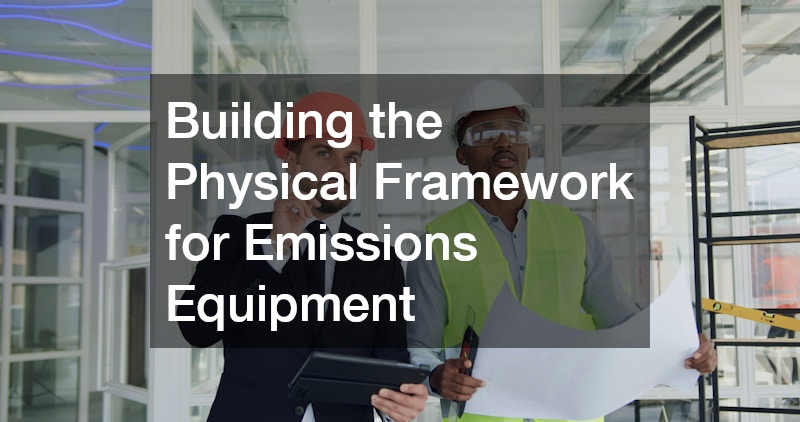
Large emissions control equipment, such as rooftop scrubbers, exhaust stacks, or industrial filtration housings, often needs to be lifted into place with heavy machinery. Some of these units weigh several tons and must be raised thirty feet or more to reach rooftop mounting points, well beyond what forklifts or standard lifts can safely handle. This is where crane rental becomes a practical necessity rather than a luxury, since these components are frequently too large or too heavy to install with standard equipment.
Choosing the right crane rental depends on factors like the weight of the equipment, the reach required, and the layout of the site itself. A tight urban lot surrounded by other buildings may call for a compact crawler crane, while a wide-open industrial yard might accommodate a larger telescopic boom crane for faster setup. Ground conditions matter too, since soft soil or uneven pavement can affect stability and may require additional matting or outriggers.
Planning for equipment access early in a project can save significant time and money, especially on sites with limited clearance or tight scheduling windows. Contractors should also account for permitting requirements, street closures, and utility lines that might interfere with the lift path. Coordinating crane availability weeks in advance, rather than scrambling once the equipment arrives on-site, helps avoid costly delays and idle labor crews waiting on a lift that isn’t ready.
Once equipment is in place, the building itself has to support it safely. A commercial roofer plays a key role here, reinforcing rooftop structures so they can bear the added weight of exhaust systems, filtration units, or solar-assisted ventilation equipment. Some emissions control units add several hundred pounds per square foot once ductwork, housings, and mounting frames are factored in, which is often more than an older roof deck was ever designed to hold.
Beyond raw weight, a commercial roofer has to account for vibration from blowers and compressors, added penetrations for venting, and drainage patterns that shift once new equipment blocks existing water flow paths. Reinforcement might mean upgrading joists, adding load-distributing curbs, or installing dedicated equipment platforms rather than mounting directly on the membrane. Waterproofing details around every new penetration also matter, since a single poor seal can undermine an otherwise sound structural upgrade.
Skipping this step can lead to leaks, structural stress, or even equipment failure down the road, so it pays to involve roofing professionals during the design phase rather than after installation. Bringing them in early also allows engineers and facility managers to coordinate load calculations, placement, and access routes before equipment orders are finalized, avoiding costly rework once systems are already on site.
- Confirm rooftop load capacity before ordering heavy emissions equipment — get a structural engineer’s sign-off, since selective catalytic reduction units and scrubbers can weigh several thousand pounds
- Schedule crane access around weather and site traffic patterns, avoiding high-wind days and peak delivery hours that could delay a lift
- Verify permits for both lifting equipment and roof modifications, including local crane operation permits and any building department approval for penetrations or added support
- Coordinate structural inspections after installation is complete to confirm load distribution matches engineering specs and catch issues before equipment is fully commissioned
- Document equipment weight, anchor points, and access routes for future maintenance crews and inspectors
Managing Safety Around Active Infrastructure Projects
Any time heavy equipment, contractors, or specialized vehicles are on site, safety planning becomes just as important as the technical work itself. Traffic control companies are often brought in for larger installation projects, particularly when work spills into parking lots, loading docks, or public roadways. Their job is to keep vehicles, pedestrians, and workers separated so that installation crews can focus on the technical details without unnecessary risk.
Clear communication is just as important as physical barriers. Custom signage helps direct traffic, mark restricted zones, and inform employees or customers about temporary changes to normal operations. Well-placed signs reduce confusion, prevent accidents, and can even help a business maintain a professional appearance during what might otherwise look like a chaotic construction period.
- Use reflective or illuminated signage for low-light work periods
- Post clear detour routes if parking areas are affected
- Update signage as project phases change
- Include contact information for on-site safety coordinators
Sanitation Needs During Larger Installation Projects
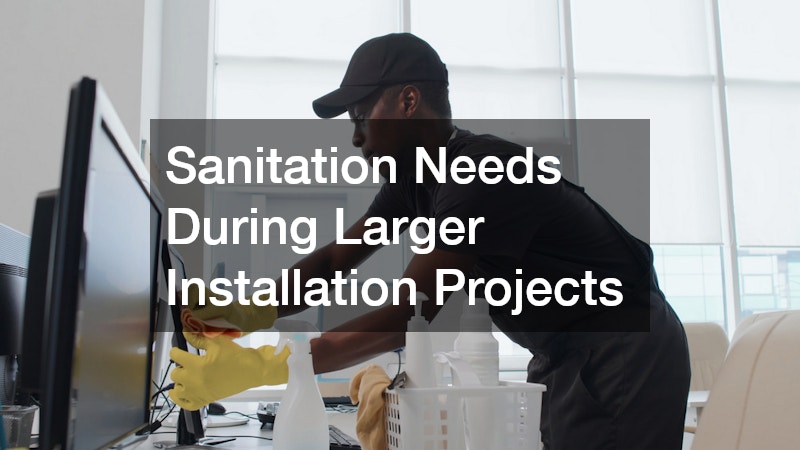
Installing or upgrading emissions infrastructure often means having extra crews on site for days or weeks at a time, and that creates practical needs that are easy to overlook. Porta potty rentals are a common solution for construction zones without easy access to indoor facilities, helping keep crews comfortable and projects on schedule. This is especially true for outdoor installations, rooftop work, or sites where existing restrooms are not accessible to contractors.
Larger facilities also need to think about their existing wastewater systems during heavy construction or increased occupancy. Commercial septic system pumping may be necessary more frequently when a property sees added foot traffic from installation crews or when new equipment increases water usage. Keeping this system in good working order prevents backups that could delay a project or create unsanitary conditions on site.
- Schedule portable restroom service based on crew size and project length
- Monitor septic capacity before adding new water-using equipment
- Keep maintenance records in case of health inspections
- Plan pumping schedules around peak business hours to reduce disruption
Indoor Air Quality and Filtration Standards
Emissions compliance is not just about what goes outside a building, it also affects the air people breathe inside. Facilities that handle combustion byproducts, chemical processes, or heavy dust often rely on hepa air filters to capture fine particulates before they circulate through occupied spaces. These filters are especially important in healthcare facilities, food production plants, and any workplace where air quality directly affects employee health.
Choosing the right filtration system depends on the specific pollutants involved and how often the air needs to be exchanged. Facility managers should work with qualified technicians to test air quality regularly and replace filters according to manufacturer recommendations rather than waiting for visible problems to appear. Consistent maintenance is often the difference between a system that protects indoor air and one that simply looks good on paper.
Climate Control Systems That Support Emissions Equipment
Many emissions control devices, from catalytic units to filtration housings, are sensitive to temperature and humidity swings. Catalytic converters and selective catalytic reduction (SCR) systems, for example, often require stable ambient conditions to maintain the chemical reactions that reduce nitrogen oxides and other pollutants. Excess humidity can also corrode sensor housings or interfere with the accuracy of oxygen and particulate sensors, leading to false readings and compliance flags.
This makes reliable climate control an essential part of any compliant facility, and it is one reason commercial HVAC companies are frequently involved in emissions infrastructure projects. These contractors typically design systems that maintain temperatures within a narrow band, often between 65 and 80 degrees Fahrenheit, while controlling relative humidity to prevent condensation on sensitive electronics. Redundant cooling capacity is also common in these installations, since a single HVAC failure could push equipment outside manufacturer tolerances within hours.
Properly sized and maintained HVAC systems keep sensitive equipment operating within manufacturer specifications, which helps avoid unexpected downtime or costly repairs. Routine maintenance schedules, including filter changes, refrigerant checks, and airflow balancing, further reduce the risk of thermal stress on emissions hardware. Facilities that neglect this coordination often see shortened equipment life cycles and a higher likelihood of failing periodic emissions audits.
Beyond protecting equipment, HVAC systems themselves are subject to emissions and efficiency standards in many jurisdictions. Refrigerant regulations are a major driver here, as phase-downs of high-GWP substances like R-410A under the EPA’s AIM Act are pushing facilities toward lower-impact alternatives such as R-32 or R-454B, often requiring new components rather than simple refrigerant swaps. Energy codes like ASHRAE 90.1 also set minimum efficiency thresholds for rooftop units, chillers, and makeup air systems that support emissions-control equipment.
Older systems may need upgrades or retrofits to meet current requirements, particularly in commercial kitchens, manufacturing spaces, or buildings with large exhaust needs. A restaurant running a 15-year-old exhaust hood system, for example, may find its makeup air unit no longer meets current airflow balancing or filtration standards, forcing a costly mid-life replacement. Manufacturing facilities with process exhaust often face similar issues when ventilation rates tied to VOC or particulate controls are updated by local air quality agencies.
Regular inspections can catch small issues before they become expensive compliance problems. Checking damper calibration, filter loading, and control system sensors on a quarterly basis can flag drift in airflow rates well before an audit does. Facilities that log these inspections systematically also build a documentation trail that regulators and insurers increasingly expect during compliance reviews.
- Schedule seasonal HVAC inspections (spring and fall) to catch efficiency losses before they strain emissions sensors
- Ask about emissions-compliant equipment—such as EPA-certified refrigerants and low-NOx furnace models—when replacing older units
- Keep documentation of HVAC maintenance, including service dates, technician certifications, and refrigerant handling logs, for compliance audits
- Monitor humidity levels near sensitive emissions equipment, ideally maintaining relative humidity between 40-60% to prevent sensor drift
- Install dedicated dehumidification or supplemental climate control in control cabinets and server rooms housing emissions monitoring electronics
- Track filter replacement intervals, since clogged HVAC filters can cause temperature swings that throw off sensor calibration
Emissions Considerations for Restaurants and Food Facilities
Commercial kitchens face a unique set of emissions challenges, particularly when it comes to grease, smoke, and cooking byproducts. Improper handling of used cooking oil can lead to clogged exhaust systems, fire hazards, and environmental violations, which is why proper cooking oil disposal is such an important part of restaurant operations. Many municipalities require documented disposal practices, and failing to comply can result in fines or even forced closures.
Beyond disposal, restaurants need to think about how grease and smoke interact with their broader ventilation and exhaust systems. Regular cleaning of hoods, ducts, and filters reduces fire risk and keeps emissions within acceptable limits. Working with a licensed disposal service also protects local waterways, since improperly discarded grease is a leading cause of sewer blockages in many communities.
- Store used oil in sealed, labeled containers until pickup
- Schedule regular hood and duct cleaning to reduce fire risk
- Keep disposal records for local health inspections
- Train staff on proper handling procedures to avoid spills
Cold Storage Reliability and Its Connection to Compliance
It might not seem obvious at first, but refrigeration systems play a role in emissions compliance too, particularly for businesses that store perishable goods or temperature-sensitive materials. A malfunctioning unit can lead to spoiled inventory, increased waste, and higher energy use, all of which have downstream environmental and financial costs. This is why prompt walk in cooler repair is so important for any business that relies on consistent refrigeration, from restaurants to medical facilities.
Refrigerant leaks are another concern, since many refrigerants are regulated due to their environmental impact. Routine inspections can catch small leaks before they become larger problems, both for compliance purposes and for controlling operating costs. Business owners should treat refrigeration maintenance as part of their broader environmental responsibility, not just an equipment issue.
- Inspect door seals and temperature logs weekly
- Address unusual noises or frost buildup immediately
- Schedule professional refrigerant checks annually
- Keep maintenance records in case of environmental audits
Planning for Long-Term Maintenance and Monitoring

Once emissions infrastructure is in place, the work does not stop there. Ongoing monitoring, record-keeping, and scheduled maintenance are what keep a system compliant year after year, rather than just at the time of installation. Many property owners find it helpful to create a maintenance calendar that tracks inspections, filter replacements, and equipment servicing across every system involved.
Building relationships with qualified service providers before problems arise also makes a significant difference. Waiting until equipment fails often leads to rushed decisions and higher costs, while proactive planning allows for better scheduling and more thorough inspections. Treating emissions infrastructure as an ongoing responsibility, rather than a one-time project, is the most reliable way to stay compliant and avoid unnecessary expenses.
- Create a shared maintenance calendar for all emissions-related equipment
- Keep contact information for trusted service providers on hand
- Review compliance requirements annually, since regulations can change
- Document all inspections and repairs for future reference
Modern emissions systems touch nearly every part of a property, from rooftop equipment to kitchen exhaust hoods to the air circulating through occupied spaces. Understanding the infrastructure behind these systems helps property owners make informed decisions rather than reacting to problems after they occur. Start by identifying which systems apply to your property, then build relationships with qualified professionals who can help you maintain compliance over the long term. A little planning now can prevent costly disruptions and keep your property running smoothly for years to come.