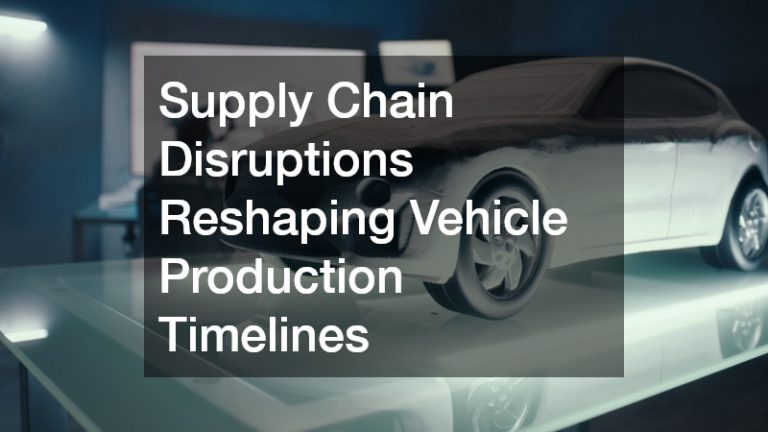
If you have been waiting months for a new vehicle to arrive, or watched dealership lots sit unusually empty, you are not imagining things. Supply chain disruptions have touched nearly every stage of vehicle production, from the mines that supply raw metals to the factories where cars are assembled. Understanding what is actually happening behind the scenes can help you set realistic expectations, plan your purchase timeline, and make smarter decisions while you wait. This article breaks down the lesser-known factors, including construction and infrastructure challenges, that are quietly reshaping how long it takes to get a new vehicle into your driveway.
How Raw Material Shortages Are Slowing Down New Plant Construction
Automakers respond to rising demand by building new plants or expanding existing ones, but construction itself has become a bottleneck. Steel and metal shortages have driven up costs and extended lead times for structural components used in these facilities. When a manufacturer cannot secure enough rebar for foundational work, groundbreaking dates slip, and every downstream production milestone shifts with them.
Before a single beam goes up, engineers have to confirm that a site can safely support the massive equipment and heavy machinery used in automotive manufacturing. This is where structural engineering becomes critical, since plans must account for material substitutions or delayed shipments without compromising safety. These adjustments take time, and time is exactly what automakers do not have when trying to meet consumer demand.
- Rebar shortages have pushed some foundation timelines back by several weeks or months
- Structural engineering teams are increasingly asked to design around available materials rather than ideal specifications
- Price volatility in steel markets makes budgeting for new plants harder to predict
- Some automakers are pausing expansion plans until material supply stabilizes
Why Automakers Are Expanding and Retrofitting Existing Facilities
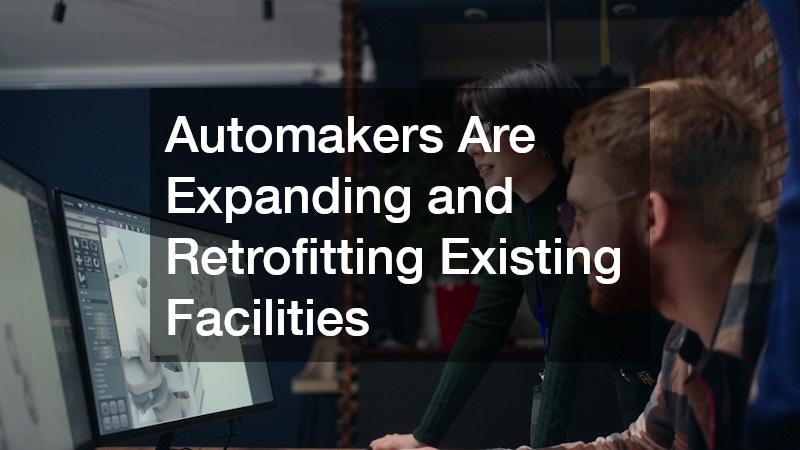
The auto industry is under constant pressure to ramp up capacity — for EV lines, new model launches, or reshoring production — but a greenfield plant can take three to five years from site selection to first vehicle off the line. Retrofitting an existing facility can compress that timeline dramatically, sometimes to a matter of months, which is why so many manufacturers are choosing to expand in place rather than build new.
The infrastructure gap
Most automotive plants weren’t built with today’s operational demands in mind. A building constructed decades ago for a simpler assembly process wasn’t engineered to carry:
- Modern HVAC systems needed for climate-controlled paint booths, battery assembly (which often requires strict humidity control), or cleanroom-adjacent processes for electronics integration
- Solar arrays, which many automakers are adding to hit sustainability targets and hedge against energy costs, but which add substantial dead load to a roof deck
- Heavier robotics and overhead conveyor systems, which concentrate point loads in ways older trusses weren’t designed to handle
- Additional utility runs — conduit, ductwork, sprinkler upgrades — that all have to penetrate or hang from the roof structure
Because the roof is the interface for nearly all of these upgrades, it becomes the critical path. A structural engineer has to verify load capacity before anything else can be installed, and commercial roofing companies experienced with industrial and manufacturing environments have to execute the work without compromising weather-tightness — a leak over a paint line or an electrical panel isn’t a minor inconvenience, it’s a production stoppage.
Why sequencing matters more than speed alone
The appeal of retrofitting is speed relative to new construction, but that speed only holds up if the work is phased correctly. Plants generally can’t shut down for a multi-week roofing project, so contractors and facility managers typically:
- Break the roof into sections tied to production zones, so work happens over areas that are down for maintenance, retooling, or lower-priority lines
- Schedule the noisiest or most disruptive work (demolition, structural reinforcement) around shift changes or planned downtime
- Use temporary weather protection between phases to keep the building enclosed while old roofing is removed and new systems are installed
- Coordinate closely with the trades installing the HVAC, solar, or conveyor equipment so the roof is structurally ready exactly when they need access
This phased approach is really a scheduling and risk-management exercise as much as a construction one — the goal is zero unplanned downtime, not just a finished roof.
The Role of Demolition and Site Prep in New Manufacturing Hubs
New manufacturing hubs rarely rise on truly empty land. Much of the industrial real estate attractive to automakers — good highway and rail access, existing utility infrastructure, favorable zoning — is attractive precisely because something was already built there. That means before a single foundation is poured for a new plant, an old one often has to come down, and that process is far more involved than it looks from the outside.
Why demolition is a strategic phase, not a formality
Treating demolition as “step zero” instead of a real project phase is one of the most common ways timelines slip. A few reasons it deserves front-loaded planning:
- Structural unknowns. Older industrial buildings often have undocumented additions, modified load paths, or deteriorated structural members that only become apparent once demolition starts — which can force mid-project redesign of the teardown sequence.
- Underground utilities. Decades-old sites frequently have abandoned or poorly mapped utility lines, tanks, or conduits. Hitting one unexpectedly can halt work, trigger safety protocols, and require utility locate services that add days or weeks.
- Environmental compliance. Older industrial sites may have legacy contamination — asbestos, lead paint, soil contamination from past manufacturing processes, or underground storage tanks. Regulatory review, remediation, and documentation all have to happen before site work can proceed, and these processes run on regulatory timelines, not construction schedules.
- Material recovery and recycling requirements. Many jurisdictions now require deconstruction plans that maximize material recovery (steel, concrete, etc.) rather than straight demolition-and-landfill. This changes both the method and the timeline of the teardown.
Why early involvement of experienced contractors matters
Bringing in commercial demolition contractors early — often during site selection, not after the deal closes — lets automakers front-load the risk assessment instead of discovering it mid-project. An experienced contractor can:
- Conduct pre-demolition surveys to flag structural, environmental, and utility risks before they become schedule-breaking surprises
- Sequence the teardown so site prep (grading, utility installation, foundation work) can begin on cleared sections while demolition continues elsewhere
- Coordinate permitting and environmental reporting in parallel with physical work, rather than treating them as sequential gates
Why this matters more now
With supply chain volatility already threatening to push back equipment deliveries and material availability, project owners have less schedule buffer than they used to. A demolition phase that runs two months over — because of an unmapped storage tank or an incomplete environmental survey — can no longer just be absorbed elsewhere in the schedule. That’s pushed automakers to treat site prep with the same rigor as the manufacturing build-out itself: detailed pre-project surveys, contingency planning for environmental findings, and contractor selection based on experience with complex industrial sites rather than lowest bid.
Managing Construction Waste During Plant Expansions
Large-scale plant construction and retrofitting generate an enormous volume of debris, and managing it efficiently keeps projects on schedule. Many construction sites rely on roll off dumpster rentals to handle everything from broken concrete to packaging materials, allowing crews to keep work areas clear and safe. Without a steady system for waste removal, job sites can quickly become congested, slowing down every trade working on-site.
Sustainability has also become part of the equation, with many facilities incorporating can recycling programs and other material recovery efforts into their construction and demolition process. Recovering aluminum, steel, and other recyclable materials not only reduces landfill waste but can also offset some project costs. These practices are increasingly expected by local governments and environmental regulators overseeing large industrial builds.
- Roll off dumpster rentals help keep job sites organized and reduce safety hazards
- Recycling programs targeting metal, cardboard, and can recycling divert significant waste from landfills
- Efficient waste management can shave days or weeks off a construction timeline
- Some jurisdictions require documented recycling rates before permits are finalized
Keeping Production Lines Running with Reliable Power and Equipment
Once a facility is built or retrofitted, keeping it running smoothly depends heavily on electrical infrastructure that can support automated assembly lines, robotics, and climate-controlled paint booths. Licensed commercial electricians play a central role in installing and maintaining the wiring, panels, and backup systems that prevent costly downtime. A single electrical failure on a modern assembly line can halt vehicle production for hours or even days, further compounding existing supply chain delays.
Many manufacturers are also upgrading their electrical systems to handle new technology, including battery production lines for electric vehicles. These upgrades require careful planning to avoid overloading existing infrastructure while construction and retrofitting continue elsewhere in the facility. Coordinating this work without shutting down active production lines takes significant scheduling expertise.
Heavy Equipment and Logistics Bottlenecks
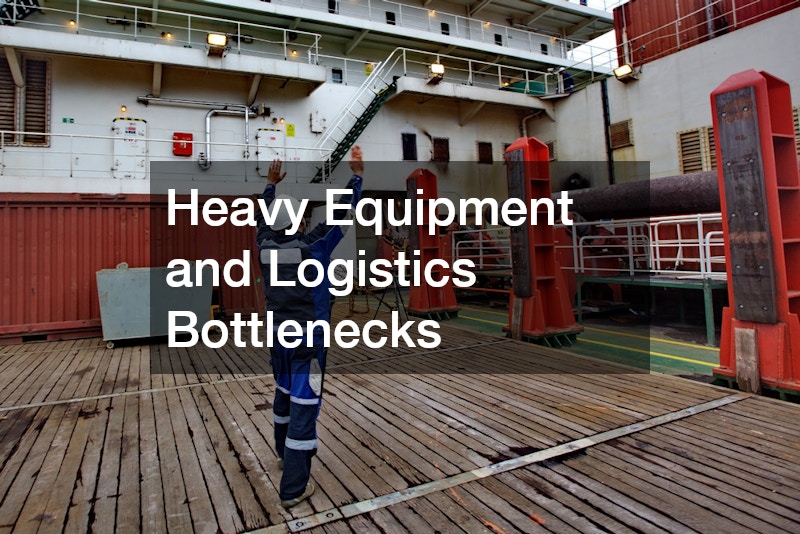
Building or expanding a vehicle manufacturing facility requires lifting and placing extremely heavy components, from prefabricated steel sections to massive HVAC units on rooftops. Reliable crane companies are essential partners in these projects, and their equipment availability can directly affect how quickly a facility comes together. When cranes are booked out months in advance due to high regional construction demand, project timelines slip even further.
Beyond construction, logistics bottlenecks extend to the delivery of finished vehicles and parts, with ports and rail yards experiencing their own backlogs. Coordinating crane schedules alongside material deliveries requires precise planning, since even a short delay in one area can cascade through the entire project. This is one reason why some manufacturers are choosing to expand in regions with more available heavy equipment and skilled labor.
Protecting Sensitive Data Amid Supply Chain Shifts
As automakers relocate operations, retrofit old buildings, or shut down outdated facilities, they generate large volumes of sensitive paperwork, including supplier contracts, employee records, and proprietary design documents. Secure shredding services have become an important part of facility transitions, ensuring that confidential information does not end up improperly discarded during a move or closure. This is especially important when older buildings are being demolished or repurposed for new tenants.
Data security concerns extend beyond paper documents to old hard drives, prototypes, and internal reports tied to discontinued vehicle models. Properly disposing of these materials protects both the company and consumers from potential data breaches or intellectual property theft. Facilities that skip this step during rapid transitions risk regulatory penalties and reputational damage.
Facility Maintenance and Avoiding Unplanned Downtime
Once a plant is operational, ongoing maintenance becomes just as important as the original construction in keeping production timelines steady. Scheduled commercial HVAC preventative maintenance helps prevent the kind of unexpected equipment failures that can shut down climate-sensitive processes like painting and battery assembly. Regular inspections catch small issues before they turn into expensive, time-consuming repairs.
Many manufacturers now build maintenance schedules directly into their production calendars, treating equipment upkeep as a non-negotiable part of the process rather than an afterthought. This proactive approach reduces the risk of surprise shutdowns that would otherwise add more delays to an already strained supply chain. Facilities that invest in preventative care tend to recover faster from external disruptions like part shortages or shipping delays.
- Preventative maintenance reduces the likelihood of costly emergency repairs
- Climate control is critical for paint booths, battery lines, and clean assembly areas
- Scheduled inspections help facilities plan downtime instead of reacting to it
- Well-maintained equipment tends to have a longer operational lifespan
What Consumers Can Do While Waiting for Their Vehicle
While much of the supply chain disruption is outside any individual buyer’s control, there are practical steps consumers can take to navigate longer wait times. Staying flexible on trim levels, colors, and optional features can significantly shorten how long you wait for a new vehicle. Working closely with a dealership that provides transparent production updates also helps set realistic expectations rather than relying on guesswork.
It also helps to understand that delays are often tied to factors far removed from the dealership itself, including construction slowdowns, material shortages, and logistics bottlenecks discussed throughout this article. Buyers who research current industry conditions tend to make more informed decisions about whether to wait for a specific model or consider available alternatives. Patience paired with realistic expectations usually leads to a smoother car-buying experience overall.
Vehicle production timelines are shaped by far more than assembly line speed, touching everything from construction material shortages to facility maintenance schedules. By understanding these behind-the-scenes factors, you can make more informed choices about when to buy and what to expect during your wait. Stay in close contact with your dealership, ask specific questions about production status, and remain flexible where possible to reduce unnecessary delays.