
Hitting a pothole hard enough to make your car lean noticeably to one side is more than an annoyance—it is a warning sign. That visible sag often points to damaged suspension components struggling to support your vehicle evenly. Ignoring it can lead to uneven tire wear, poor handling, and even more expensive repairs down the road. Understanding what causes this lean and knowing when to act can save you money and keep you safer behind the wheel.
Broken or Weakened Springs
The coil springs or leaf springs in your suspension system are responsible for holding your vehicle at a consistent ride height on all four corners. Each spring is engineered to compress and rebound within a specific range, supporting the car’s weight while absorbing shocks from the road. A hard pothole impact can crack, bend, or completely snap a spring, causing that corner of the car to drop lower than the others. This is one of the most common reasons for a visible lean after a rough road encounter, especially on older vehicles with worn metal components. Rust and metal fatigue weaken springs over time, so a pothole hit that a newer car might shrug off can be enough to fracture a spring that’s already compromised. Coil springs typically show a clean break or visible crack near a coil, while leaf springs may show a snapped main leaf or a leaf that has shifted out of alignment. You may notice other warning signs alongside the sag, such as a clunking noise over bumps, uneven tire wear on the affected corner, or a noticeably stiffer or bouncier ride. In some cases the broken spring can even puncture a tire or rub against other components, so it’s worth having the suspension inspected promptly rather than just living with the lean.
Coil springs and leaf springs both lose their strength over time, especially after repeated impacts with potholes that force them beyond their normal range of travel. A hard enough hit can crack a coil, cause a leaf to shift out of alignment, or flatten the metal’s natural curve so it no longer supports the vehicle evenly. Once one spring is compromised, that corner of the car simply won’t hold itself up the way the other three do. You may notice the sag is more pronounced when the car is parked on level ground, or that it worsens when you load the trunk or back seat — sometimes by an inch or more compared to the unaffected side. Rear springs tend to show this effect most clearly, since added cargo weight puts extra strain on a spring that’s already weakened. A visual inspection underneath the vehicle can sometimes reveal a spring that looks compressed, twisted, or fractured compared to the opposite side. Look for gaps between the coils that are noticeably smaller than on the other side, rust concentrated at a bend or stress point, or a leaf spring with a visibly flatter arc. In more severe cases, you may even hear a clunking or creaking noise from that corner of the car when driving over bumps, which often signals the spring has shifted or partially separated from its mount.
- A hard pothole strike can crack, chip, or fully snap a coil spring, especially one already weakened by rust or age
- Rust eats away at the spring’s metal, making it brittle and far more likely to break under sudden impact
- Springs typically last 10-12 years or 100,000+ miles, so older vehicles are at higher risk after a bad hit
- A broken spring often produces a distinct clunking or rattling noise over bumps as the coil shifts or its ends grind together
- Visible sagging on one side, especially under load like passengers or cargo, usually points to a weakened or broken spring on that corner
- Left unaddressed, the uneven ride height throws off wheel alignment and camber, accelerating tire wear on the affected side
- A sagging corner also shortens shock absorber life, since the suspension geometry is no longer working as designed
Damaged Struts and Shock Absorbers
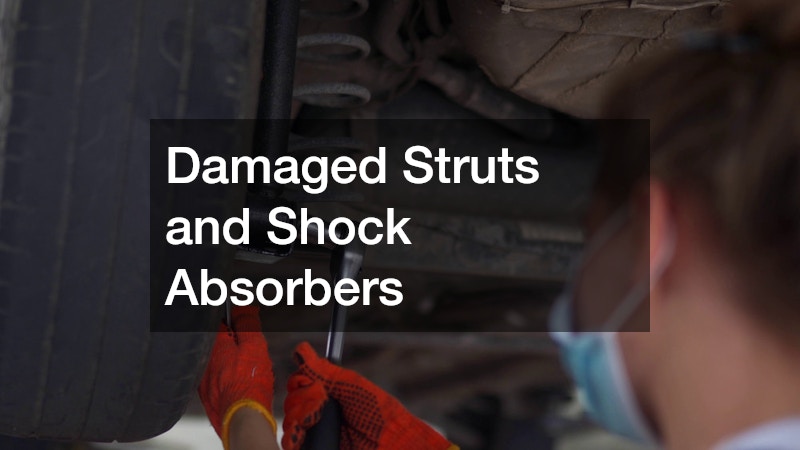
Struts and shocks control how your car absorbs impact and returns to a stable position after hitting a bump. When one strut takes a harder hit than the others, its internal seals or mounting points can fail, leaving that side unable to support the vehicle properly. This often shows up as a bouncy, uneven ride in addition to the visible lean.
A leaking strut is a telltale sign of internal damage, as hydraulic fluid escapes and reduces the component’s ability to cushion the wheel. Drivers sometimes mistake this for a minor issue, but a compromised strut affects braking distance and steering response, making it a safety concern rather than just a cosmetic one.
- Fluid stains near the wheel well often indicate a leaking strut
- Excessive bouncing after a bump signals reduced shock performance
- One-sided wear on tires can trace back to a bad strut
- Clunking or knocking sounds over rough pavement are a red flag
Bent Control Arms and Ball Joints
Control arms connect the suspension to the frame and allow the wheels to move up and down while staying aligned. A sharp pothole impact can bend a control arm or damage the ball joint that lets it pivot, throwing off the wheel’s position relative to the rest of the car. This misalignment often causes a visible tilt and can make the steering wheel feel off-center.
Ball joints wear out gradually under normal driving, but a hard impact accelerates that wear dramatically. When a ball joint becomes loose or damaged, the wheel can shift slightly outward or inward, contributing to the sagging appearance and uneven tire contact with the road.
- A clunking noise when turning often points to a failing ball joint
- Uneven tire wear patterns can reveal a bent control arm
- Steering that pulls to one side may indicate suspension misalignment
- Visual inspection may show a wheel sitting at a slightly different angle
Cracked or Collapsed Air Suspension Components
Vehicles equipped with air suspension systems rely on air-filled bags at each wheel to maintain ride height. A pothole strike can puncture or crack one of these bags, causing air to leak out and that corner of the vehicle to slowly or suddenly drop. This is especially common in luxury sedans and SUVs that use air suspension for a smoother ride.
Unlike traditional coil springs, air suspension issues often come with a dashboard warning light alerting the driver to a fault in the system. Ignoring this warning typically results in the compressor working overtime to compensate, which can burn out the pump and turn a simple leak into a much larger repair bill.
- A hissing sound near a wheel well may indicate an air leak
- Dashboard warnings for ride height should never be ignored
- Sagging that worsens overnight often points to a slow air leak
- Compressor failure is a common consequence of delayed attention
Exhaust and Underbody Damage from Impact
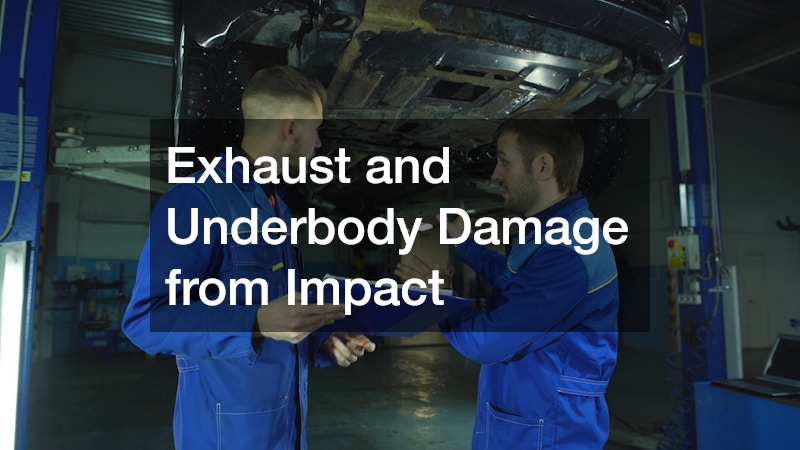
While suspension components take the brunt of most pothole damage, a hard hit can also jolt or dent parts of the exhaust system mounted underneath the car. In some cases, the impact loosens or damages the catalytic converter, which sits along the exhaust line and can shift position if its mounting brackets are bent or broken. This does not usually cause a visible sag on its own, but it is worth checking during a full inspection since the same impact that damaged your suspension may have affected nearby components.
A rattling noise from underneath the car, along with a change in exhaust sound or a check engine light, can indicate this type of damage. Because the catalytic converter is expensive to replace, catching a loose mount or minor damage early is far better than waiting for a full failure.
- Rattling near the middle or rear of the car warrants a look underneath
- A sudden change in exhaust noise after a pothole hit is a warning sign
- Check engine lights can sometimes trace back to exhaust system damage
- Early inspection can prevent a small issue from becoming a costly one
When to Schedule a Professional Inspection
Not every wobble or sag requires an immediate trip to the shop, but a visible lean after a pothole strike should never be ignored for long. A trained technician can put the vehicle on a lift, inspect each suspension component individually, and determine whether you are dealing with a simple fix or something more involved. Getting a professional opinion quickly is the best way to avoid turning a minor issue into a safety hazard.
Many auto repair shops offer a basic suspension inspection at a reasonable cost, and this diagnostic step is worth the investment even if you are unsure whether repairs are needed. If a technician confirms damage, prompt suspension repair not only restores your car’s level stance but also protects your tires, alignment, and overall handling from further strain.
- Ask for a full undercarriage inspection after any hard pothole impact
- Request a written estimate before agreeing to repair work
- Compare quotes if the recommended repair seems extensive
- Address small issues quickly to avoid compounding damage over time
A car that sags on one side is telling you something specific about its suspension, and figuring out the cause early makes the fix simpler and cheaper. Whether it turns out to be a broken spring, a failing strut, or something else entirely, the sooner you have it looked at, the better your chances of avoiding a bigger repair bill. Trust your eyes and ears, and do not wait for a small lean to turn into a bigger safety problem.