Alumina balls, often recognized for their high strength and thermal stability, play a pivotal role in various industrial applications. These spherical or cylindrical entities are engineered from aluminum oxide, a compound known for its exceptional hardness. Alumina balls offer a high resistance to corrosion, wear, and chemical reactions, making them indispensable in numerous industrial processes.
Their utility spans across sectors, from chemical and glass manufacturing to water treatment facilities. Understanding the applications of alumina balls is crucial for appreciating their contribution to modern industry.
How are Alumina Balls Used in the Chemical Industry?
Within the chemical industry, alumina balls are primarily utilized as catalysts and support media. Their high surface area and strong adsorption capabilities make them ideal for facilitating various chemical reactions. The robustness of alumina balls enables them to withstand high temperatures and pressures, which are common in chemical processing. They are particularly prevalent in catalyzing the synthesis of ammonia in the Haber process. Moreover, alumina balls assist in filtering unwanted by-products and impurities, ensuring the purity of chemical outputs.
In addition to their role in catalysis, alumina balls are essential in adsorption processes, central to chemical synthesis and purification. Due to their porous nature, these balls adsorb considerable amounts of unwanted gases or liquids, ensuring their efficient separation from desired chemical products. Their resilience against chemical degradation allows them to be reused multiple times, proving economic for long-term industrial operations. The eco-friendly nature of alumina balls further emphasizes their importance in creating sustainable chemical processes. Their consistent performance in adsorption not only enhances product quality but also contributes to environmental conservation by reducing waste.
Furthermore, alumina balls are integral to the production of petrochemicals, where they serve as a catalyst in the cracking of hydrocarbons. This process is vital for breaking down large hydrocarbon molecules into simpler compounds, which are essential building blocks for various products. The chemical industry’s reliance on alumina balls underscores their versatility and critical function in boosting production efficiency. Their application is not restricted to large-scale operations; small firms also benefit from the affordable, yet effective capability of alumina balls. Thus, alumina balls are indispensable across the spectrum of the chemical industry, from fine chemicals to large-volume petrochemical production.
What Role Do Alumina Balls Play in the Glass Manufacturing Sector?
In the glass manufacturing industry, alumina balls contribute significantly by streamlining refining and melting processes. These processes require precise control of temperature and material composition, conditions under which alumina balls excel due to their thermal stability and durability. Alumina balls are incorporated into grinding and milling operations to crush and blend glass materials uniformly. The hardness and low wear rate of alumina balls ensure minimal contamination during glass milling, maintaining the integrity and quality of the final product. Thus, they are vital in extending the life span of milling equipment and reducing maintenance costs.
The uniformity and consistency of crushed glass materials influence both product quality and manufacturing efficiency. Here, alumina balls are paramount for achieving homogeneity in glass batch compositions, resulting in superior glass clarity and color. They help to reduce particle size disparities, ensuring even melting and avoiding defects in the finished glassware. Alumina balls also play a role in minimizing energy consumption during melting, as their uniform heat transfer properties facilitate efficient energy distribution. This not only enhances production but also contributes to a reduction in manufacturing costs and environmental footprint.
Why Are Alumina Balls Essential in Water Treatment?
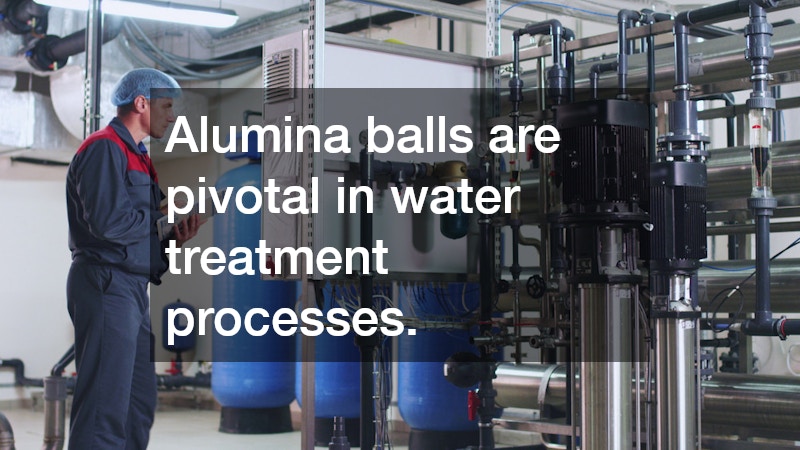
Alumina balls are pivotal in water treatment processes, thanks to their adsorption and purification capabilities. They efficiently remove impurities, such as heavy metals and fluorides, which are detrimental to water quality. The porous structure of alumina balls enhances their surface area, allowing for the effective capture and retention of contaminants. This characteristic is instrumental in producing clean and safe drinking water, particularly in regions where water quality is a significant concern. As such, alumina balls are a critical component in both municipal water systems and private filtration setups.
Aside from their adsorption capacity, alumina balls act as a medium for ion exchange processes, effectively neutralizing harmful ions in the water. This chemical exchange is essential for softening hard water, thus preventing scale buildup in pipes and improving the taste and texture of water. Their robustness allows them to function effectively over extended periods, making them cost-efficient for large-scale water treatment facilities. Furthermore, alumina balls are instrumental in treating wastewater, ensuring that industrial effluents are adequately purified before re-entering natural waterways. This ability to recycle and conserve water underscores the environmental benefits of alumina balls in promoting sustainable industrial practices.
Alumina balls are indispensable across various industries due to their exceptional properties and versatile applications. From catalysis in the chemical sector to refining processes in glass manufacturing, they enhance efficiency, product quality, and sustainability. In water treatment, alumina balls are fundamental to ensuring public health and environmental safety through effective purification methods. Their continual evolution and application reflect a dynamic industrial landscape, opening opportunities for innovation and improvements. As industry demands evolve, the robust nature of alumina balls ensures their enduring relevance and utility in fostering sustainable growth.